
Engineering Consultant
Technology Exchange and Coordination (Pvt) Ltd
The Highest Performance Industrial Consultancy in the Country

“China 0 KM” Agri–Industry–Digital Nexus Platform
TEC is looking forward to collaborating with Chinese R&D institutes, Agri companies, Financial Institutions, Training Organizations, Equipment Manufacturers, & IT/ICT companies to co-develop the platform & projects and long-term Pak–China industrial cooperation.
47+ Years Pak–China Association
Long‑term industrial engagement, trust, and collaboration
First‑of‑its‑kind private‑sector Initiatives
Proven capability in launching and delivering cross‑border industry projects.
Strong Track Record
BKIT, KVC, SPM, & “China 0 KM” platform trademark registered with IPO Pakistan + Developed 48 corn, sugarcane-based industrial projects & eco-industrial park integrated with Industry 4.0.
Physical and Digital Infrastructure
Technology Exchange & Coordination (Pvt.) Ltd.
The highest performance industrial consultancy in the country, was founded in 1993 and has set up Rs. Multibillion mega projects Soda Ash, Ethanol, Hydrogen Peroxide & 23 projects with plant equipment, know how from China. TEC works from project identification to commercial operation & boiler firing, focusing on local raw materials & long-term global demand.
Agri-Industry-Digital Nexus Platform
TEC proposes the “China 0 KM” Agri–Industry–Digital Nexus platform, inspired by China’s circular economy and eco-industrial development models, to co-develop three projects with Chinese partners at Sundar Industrial Estate, Lahore integrating agriculture, industry, and digital systems to establish corn & sugarcane value chains under CPEC Phase II.

Projects Overview
The China 0 KM platform under CPEC Phase II brings together four projects focused on corn and sugarcane value chains. These projects cover value addition of agricultural residue, biochar production from agri-waste, single-window industrial support services through Industry Resource Centre, & digital infrastructure through IT/ICT Tower. TEC has developed the projects based on its 30+ years of industrial experience, physical infrastructure, & long-standing collaboration with China.
Corn Husk Handicrafts & Women Training Centre
Conversion of corn husk residue into standardized, export-ready eco-products through women-led production units.
Biochar Plant from Corn & Agri-Waste
Production of soil-enhancing biochar using modular pyrolysis systems, utilizing corn residue and agri-waste.
Industry Resource Centre (IRC) – BKIT (Bank/Finance, Knowledge, IT/ICT, Training)
Focused on providing services under one roof for ease of doing business for setting up 48 Corn & Sugarcane Projects + Digital Eco-Industrial Park integrated with Industry 4.0.
IT/ICT Tower
One-stop digital services hub for industrial digitalization, connectivity, and technology-driven operations.
IT/ICT Tower at Defence Road, Lahore
Floor‑wise Plan for Collaboration with Chinese Companies
Floors 1–5 • Startups + Skills development
-
Floors 1–2: China–Pakistan Startup Corridor — incubation and youth-led ventures; mentor pathways and demo days.
-
Floors 3–4: Made‑in‑China Collaboration Labs — hardware showcase, Industry 4.0 starter kits, factory digitization demos.
-
Floor 5: Silk Road Talent Pipeline — training programs, certification tracks, and women-focused cohorts.
Floors 6–10 • AI + Cloud + Digital Finance + Compute, cloud gateway, security, and fintech enablement
-
Floors 6–7: AI Compute Hub — industrial optimization and value-chain digitization pilots (compute, data, models).
-
Floor 8: China Cloud Gateway — managed services for partners entering Pakistan; deployment support and compliance readiness.
-
Floor 9: Cybersecurity & Compliance — secure industrial networks, readiness drills, and standards-aligned programs.
-
Floor 10: CPEC Digital Finance Lab — trade enablement and finance workflows supporting SME growth and exports.
Floors 11–15 • Agri-Tech + Bio-Industry + Corn & sugarcane pipeline, R&D and commercialization
-
Floors 11–13: Bio‑Industry Cluster — project pipeline for corn/sugarcane value additions and applied R&D linkages.
-
Floor 14: Green Silk Road Lab — environmental technologies, circular economy pilots, resource efficiency.
-
Floor 15: Culture‑Tech & Delegation Studio — China‑friendly collaboration showcases and policy‑ready presentations.
Floors 16–20 • Anchor Zone + Services + Summit + Anchor tenants, BKIT China desk, and summit spaces
-
Floors 16–17: China 0 KM Anchor Zone — dedicated floors for major partners and regional teams.
-
Floor 18: Executive Residences — China‑friendly accommodation concept for delegations and long-term assignments.
-
Floor 19: BKIT China Desk — single‑window support for onboarding, facilitation, and problem resolution.
-
Floor 20: Friendship & Summit Hall — exhibitions, MoU ceremonies, and annual collaboration events.
Technology & AI Collaboration
AI enablement, value‑chain digitization, and training & infrastructure.
AI enablement for industry
Predictive maintenance, quality inspection, process optimization, and operational analytics—starting with pilot SMEs.
Value‑chain digitization
Traceability, standards readiness, and export documentation support—especially for agri‑industrial products.
Training & infrastructure
Programs for youth and professionals, aligned to deployment needs: data, cloud, and secure operations.
Credibility & Recognition
_PNG.png)
Friendship Award
Consulate General of PRC

China 0 KM Trademark
Trade Marks Registry, Karachi
_JPG.jpg)
Visiting Professor
Huazhong University of Science & Technology
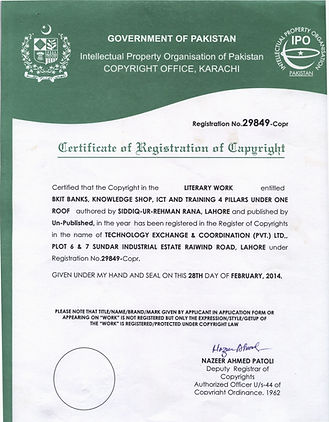
BKIT Copyright
IPO Pakistan registration

%20(3)_page-0002.jpg)
Who Should Collaborate
Traditional collaboration often stops after meetings and MoUs due to an execution gap: unclear pilots, weak local integration, fragmented services, and lack of skilled teams. “0 KM” closes that gap by combining physical infrastructure, digital capability, single‑window facilitation, and talent pipelines into one platform.
Chinese enterprises
Regional execution base, pilots with SMEs, and structured scale-up pathways.
Financial Institutions
SME credit windows, project finance structures, and trade enablement mechanisms.
Technology Partners - IT/ICT Companies
AI, cloud, IoT, automation, cybersecurity—deployed through pilots and KPIs.
Universities & Institutes
Joint labs, training programs, applied research, and student-to-industry pipelines.
Manufacturing & RnD institues
machinery, equipment and applied research
Women Entrepreneur Groups
Incubation, cross-border collaboration, training cohorts, and market access support.

